
People in the UK commonly use the term ‘woodworm’ to describe the larvae of wood-boring beetles that feed on timber as they develop. These larvae live inside the wood. Slowly tunnelling through it over a number of years before emerging as adult beetles, leaving behind small exit holes in the process. The damage they cause can affect a wide range of timber elements in a property. From floorboards and furniture to roof beams and joists. Typical indicators include small round holes in the surface of the wood aswell as fine powdery dust around affected areas (frass). In some cases, the presence of adult beetles around the room.
A combination of suitable timber and the right environmental conditions almost always leads to woodworm infestations developing. One of the most common causes is the introduction of already infested wood into a property. Such as old furniture, reclaimed timber, or structural materials that were not properly treated. Once inside, the infestation can spread if conditions allow.
Moisture plays a key role in whether woodworm can thrive. Elevated moisture levels within timber create a more favourable environment for larvae to survive and develop. However, it isn’t simply a case of wet wood equals woodworm the conditions need to be consistently suitable over time, including the right level of dampness and lack of adequate ventilation. Timber that remains dry and well-ventilated is far less likely to support an active infestation, which is why underlying issues such as leaks, condensation, or poor airflow often contribute to the problem indirectly. Book a Woodworm Survey today for an independent assessment
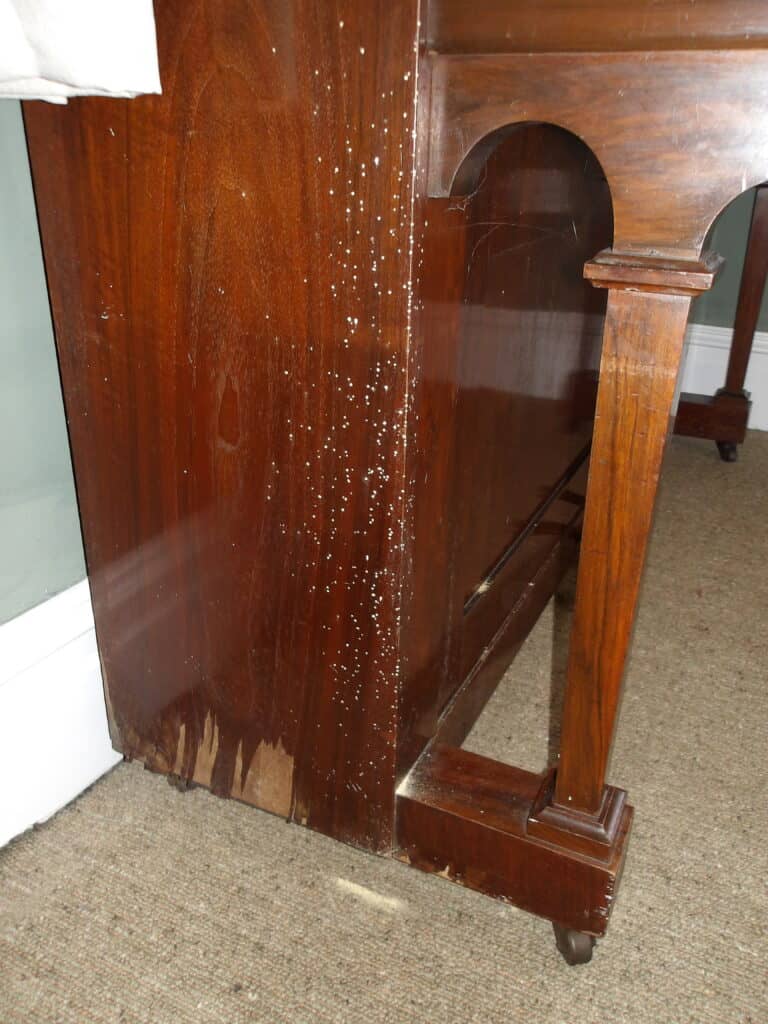
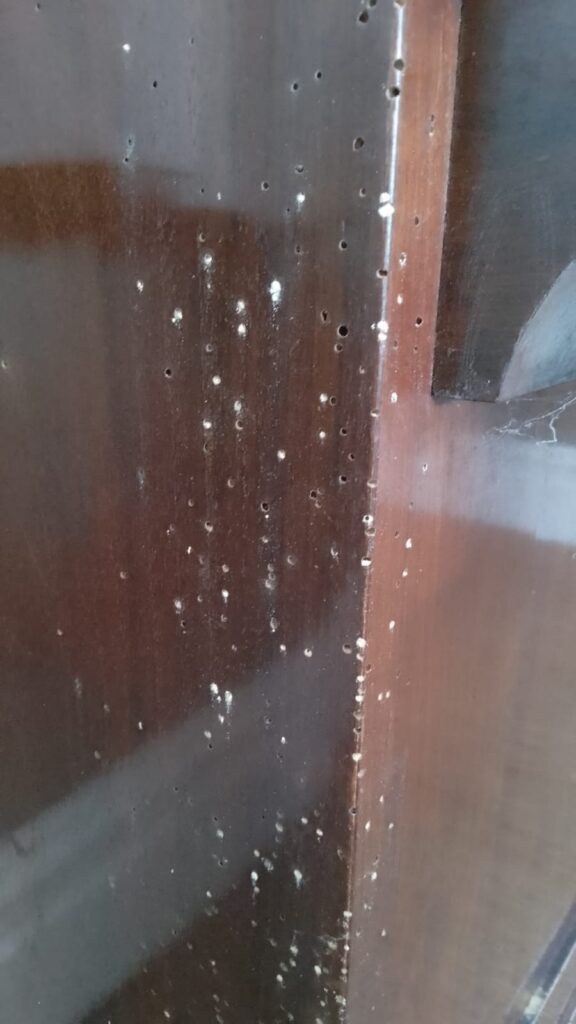
Identifying the presence of woodworm is not always straightforward. It is important to distinguish between evidence of past activity and signs of an active infestation. The most commonly recognised indicators include small, round exit holes in the surface of timber, typically ranging from 1mm to 3mm in diameter depending on the species involved. Adult beetles create these holes as they emerge from the timber.
Another key sign is the presence of frass, a fine, powdery dust produced by the larvae as they tunnel through the wood. You may find fresh frass loosely packed within holes or accumulating beneath an active infestation. In contrast, older infestations often have clean, empty holes with no associated dust.
In some cases, weakened or damaged timber may be apparent, particularly where infestation has been extensive or prolonged. However, surface appearance alone does not reliably indicate structural condition, and assessing it properly often requires further investigation. The presence of adult beetles typically seen during the warmer months, can also indicate that a life cycle is ongoing within the property.
A professional timber inspection may be necessary where there is uncertainty about the extent or status of a suspected infestation. This is particularly relevant when purchasing a property. A damp and timber survey will confirm if the woodworm is active or historic.
An independent assessment will determine whether any remedial action is required. Identify contributing factors such as damp or poor ventilation, and avoid unnecessary or inappropriate treatment.