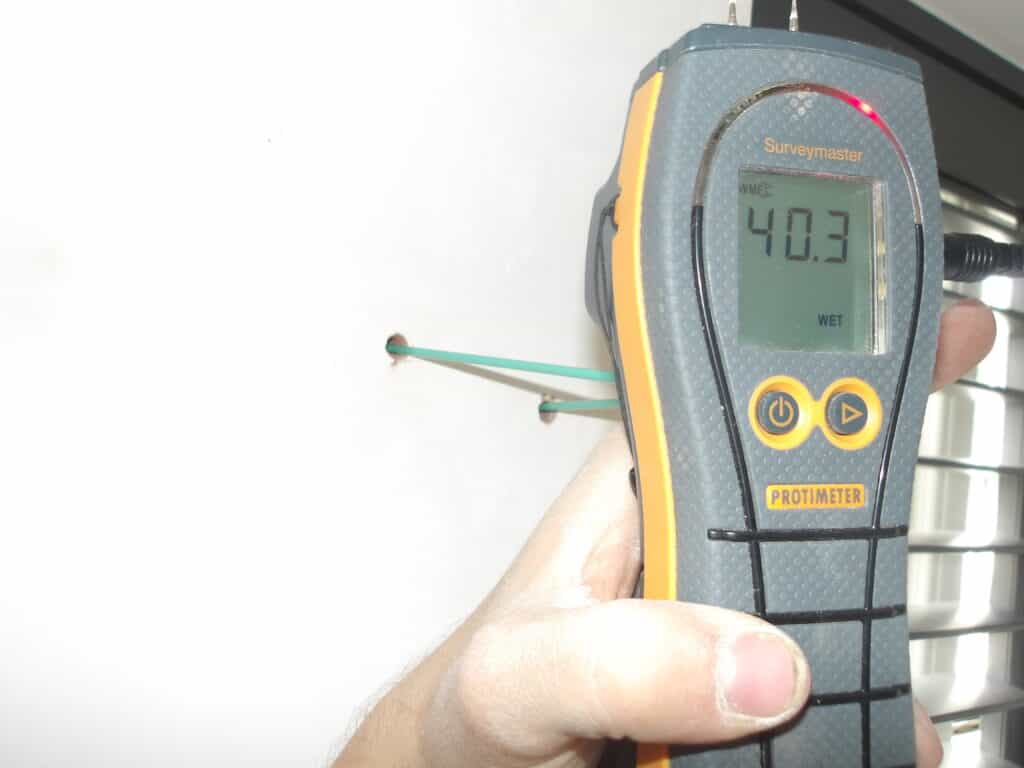
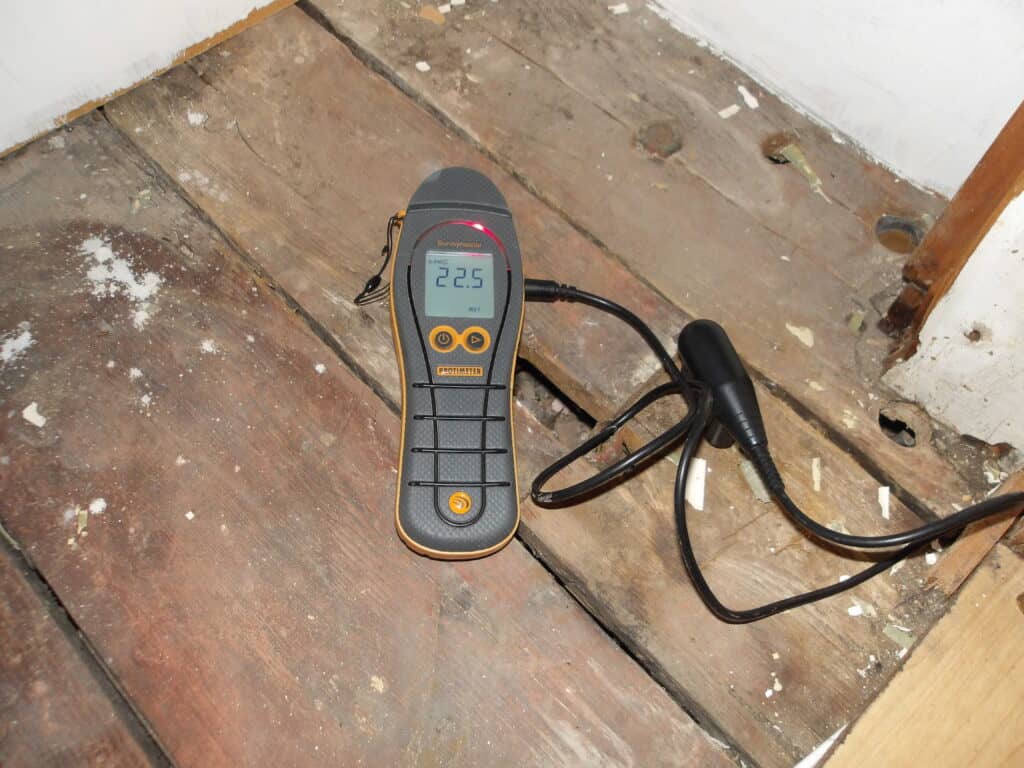
A damp and timber survey is a specialist inspection carried out on a property or building to identify the cause of dampness, timber decay, woodworm infestation, condensation, and other moisture-related defects.
Unlike a general property inspection, a damp and timber survey focuses specifically on diagnosing issues affecting the building’s structure and fabric. The purpose of the survey is not simply to identify symptoms but to determine the root cause of any problems.
The surveyor should first assess the outside of the building to identify any defects that could contribute to moisture ingress. This may include checking:
Inside the property, the surveyor will look for evidence of:
Walls, floors, ceilings, skirting boards and joinery should all be examined for signs of moisture-related deterioration.
Where access is available, subfloor voids and roof spaces should also be inspected.
Subfloor inspections can reveal issues such as:
Loft inspections allow the surveyor to assess the condition of roof timbers and identify signs of leaks, rot, woodworm activity, or condensation.
Damp and timber surveys are usually carried out during the property purchase.
In some cases, mortgage lenders require a specialist damp and timber report before they will approve a mortgage application. Where this is not the case, a Home Survey carried out by a RICS surveyor may still highlight signs of dampness or timber defects and recommend further investigation by a qualified damp and timber surveyor.
When this happens, a specialist damp survey can provide clarity by ruling out unfounded concerns while also identifying any potentially costly issues before you complete the purchase. To ensure an accurate and reliable assessment, it is important to use a suitably qualified and experienced professional who understands how buildings perform and how moisture-related defects develop.
At our company, our PCA-qualified surveyors draw on extensive experience to investigate and diagnose moisture and timber-related defects in both residential and commercial properties.
A qualified damp surveyor understands how buildings perform and accurately diagnoses the cause of dampness.
When arranging a pre-purchase damp and timber survey, it is important to choose a company that is completely independent and not tied to remedial works.
Many companies that carry out surveys also sell damp-proofing and timber treatment services. This can create a conflict of interest, as companies may recommend treatments that align with the services they sell.
As independent damp surveyors, we do not undertake remedial works. Our reports are impartial, evidence-based, and focused solely on identifying the true cause of any defects. This means we provide honest, impartial advice and only recommend treatments where they are genuinely necessary.