
Damp in a loft space is caused by excess moisture becoming trapped within the roof void. While many people immediately assume a leaking roof is to blame. There are several different factors that can contribute to moisture build-up within a loft. We often find that loft spaces are not fully accessed during general surveys. These issues can go unnoticed for months or even years before any obvious signs of damage appear.
When moisture levels remain high for long periods, the risk of timber defects increases significantly. Damp roof timbers can become vulnerable to fungal decay. While persistently wet conditions may eventually lead to more serious timber deterioration. In some circumstances, prolonged moisture problems can create conditions suitable for dry rot and other forms of timber decay, particularly where defects are left unresolved.
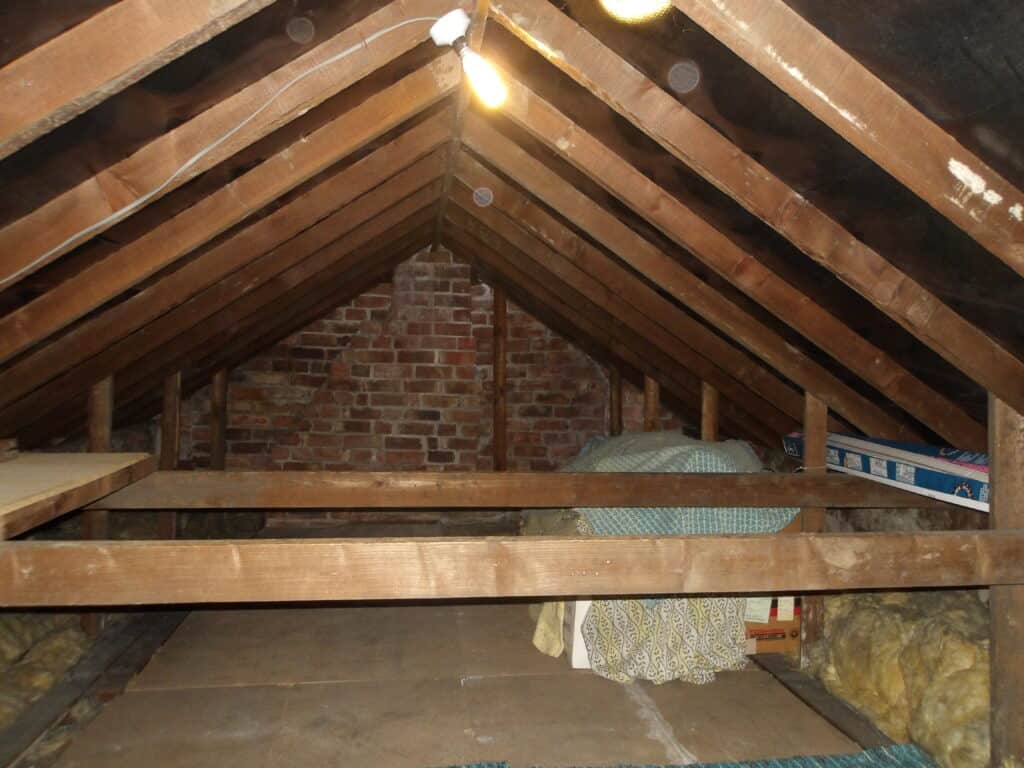
During Level 2 and Level 3 home surveys, surveyors commonly identify evidence of damp within loft spaces. These surveys assess the property as a whole and are not specialist damp and timber inspections. They will commonly highlight potential concerns rather than diagnose the exact cause.
Where surveyors identify issues such as damp roof timbers, condensation, woodworm or signs of moisture in the loft space. The surveyor will usually recommend further investigation by a specialist. This is a common step in the home buying process when there are concerns about timber decay or moisture-related defects.
A pre-purchase damp and timber survey then provides a more detailed inspection of the roof space. This includes assessing roof timbers for decay or insect activity, checking insulation and ventilation, and identifying the source of any moisture problems.
Many cases of loft damp found during a house purchase turn out to be related to ventilation or condensation issues. However, it is important to confirm the cause before proceeding. As independent damp and timber surveyors. We regularly carry out independent damp and timber surveys following general property surveys. We provide clear, impartial findings on the condition of the loft space and roof timbers.
Investigating damp in a loft space involves identifying the source of the excess moisture and assessing whether any damage has occurred to the roof structure.
A surveyor will first inspect the exterior of the property, looking for defects that could allow rainwater to enter the roof space. This may include checking the roof covering, flashing and other vulnerable areas for signs of water ingress.
Our surveyor then inspects the loft space internally to assess the condition of the roof timbers, insulation and ventilation. The surveyor takes moisture readings from affected timbers and checks for signs of fungal decay, wet rot, dry rot and woodworm activity. An Independent Surveyor will also assess whether the loft space is receiving adequate ventilation and whether insulation is contributing to moisture build-up.
Following the loft survey, An independent damp and timber report is produced outlining the findings. Identifying the likely cause of the damp and highlighting any recommendations for further action. If you are concerned about damp, condensation or timber defects within your property you can have a full independent damp and timber survey carried out.