
Electronic moisture meters are one of the tools in a surveyor’s arsenal, but on their own, they do not diagnose damp.
They are widely used during damp surveys, mortgage valuations, and pre-purchase reports. Used correctly, they are a useful tool for investigating moisture. Used incorrectly, they frequently lead to misdiagnosis and unnecessary, often costly, remedial work.
A moisture meter is simply a tool for building up a picture of what is happening within a wall. This process is known as moisture profiling. A surveyor takes readings across different areas, higher here, lower there – and uses this information to help form a broader understanding of the issue.
However, a meter reading alone cannot tell you:
Despite this, many reports rely heavily, or even entirely on moisture meter readings. This over-reliance has led to frequent misdiagnosis and unnecessary damp-proofing work across the UK.
An electronic moisture meter works by sending an electrical current through a contact plate that contains two pins.
These pints then measure how easy that current passes through the material in question, a higher reading only indicates that electricity is passing though fairly easily.
Its true that moisture can increase the conductivity, but it isn’t the only factor that does.
These high readings can be misleading and does not always mean that a wall is damp.
This is why moisture meter readings must always be interpreted in context. On their own, they are not a diagnosis, but just one piece of information within a much wider assessment.
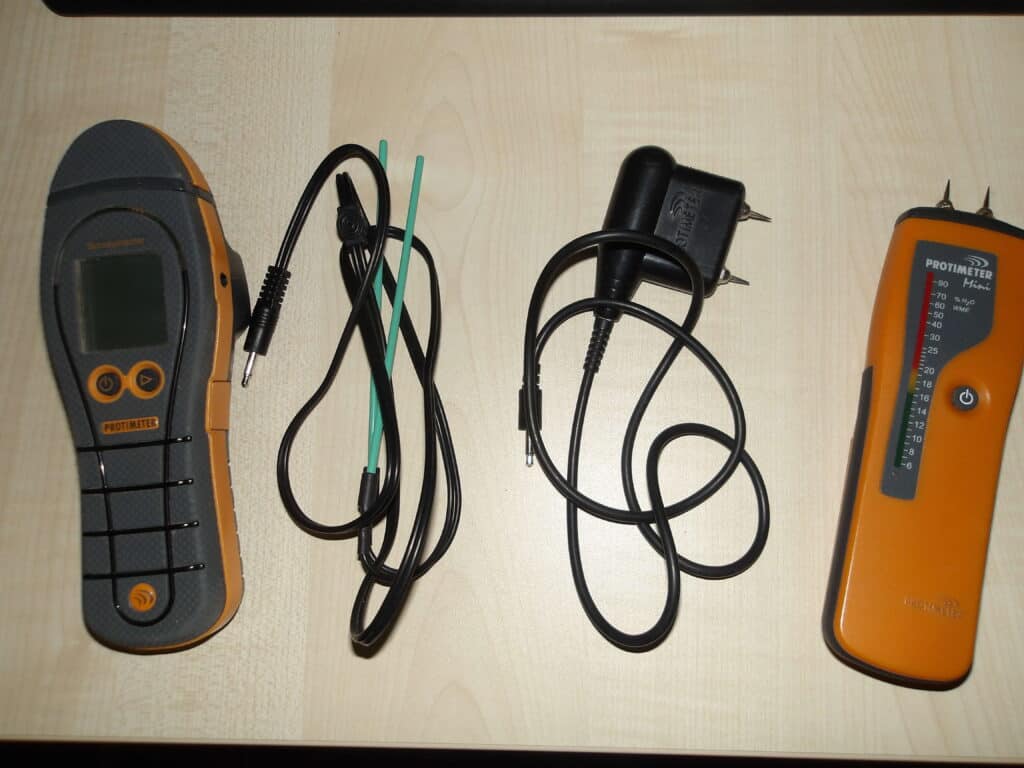
High readings do not always mean a wall is damp. In many cases, they are misleading.
Common causes include:
Damp itself is not the problem—it is a symptom of an underlying issue.
Accurately diagnosing that issue requires more than a meter. It requires:
A moisture meter should support these observations—not replace them.
Independent damp surveyors play a critical role in accurate diagnosis. Unlike contractors who sell remedial treatments, they have no financial interest in recommending unnecessary work.
Their focus is on understanding the building as a whole and identifying the true cause of the problem—rather than applying a one-size-fits-all solution based on a meter reading alone.
For more expert insights, practical tips, and guidance on dealing with damp, condensation, and timber issues, visit our Preservation Property Care Blog. It’s a valuable resource for homeowners, landlords, and property investors looking to maintain the health and longevity of their properties.