
Damp can originate from a neighbouring property. In many cases, moisture can enter defects in the adjoining building such as cracked render, failed pointing, or leaking gutters. It can then travels through the party wall. This is known as lateral penetrating damp, and it can cause visible damp patches and Mould. Causing damage to internal finishes on your side.
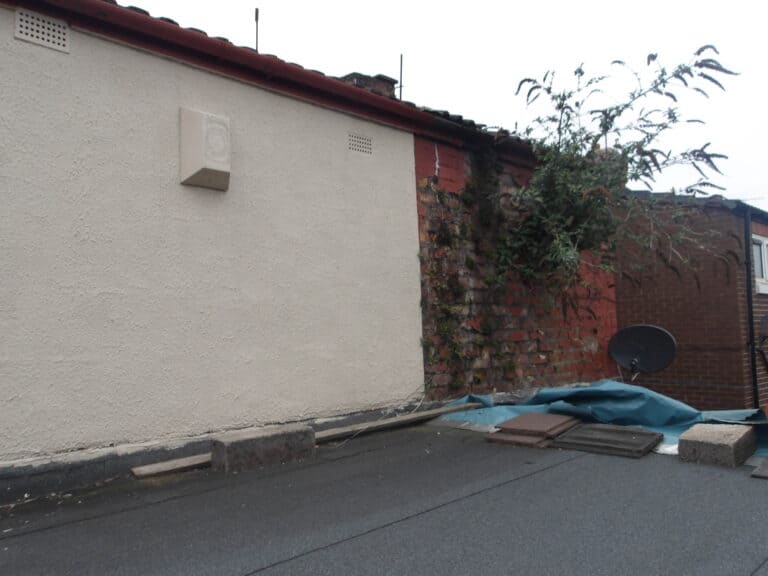
When a neighbouring property falls into disrepair with things like broken guttering, missing pointing, damaged brickwork, or holes in the roof. Rainwater can enter the structure on their side.
If the house has solid brick walls that moisture doesn’t just stay there. Instead, it can move throughout the masonry and begin to move horizontally through the party wall.
Brickwork is naturally porous, meaning it can absorb and hold moisture. This moisture can gradually migrate through the wall and cause issues on your side of the property.
You may start to see problems like, Damp patches on internal wall, peeling paint or wallpaper, salt staining on plaster. Or in more severe cases, timber decay such as dry rot
We call this lateral penetrating damp, and in some cases a neighbouring property causes the problem.
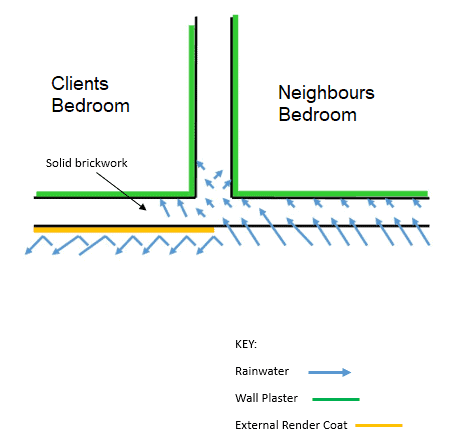
Fixing damp caused by a neighbours house starts with addressing the source of moisture at its origin. If water is entering next door through defects like broken guttering, damaged brickwork, or failed pointing. It will continue to track through the party wall until those issues are resolved.
This means that internal repairs alone, such as re-plastering or redecorating, will only provide a short-term cosmetic improvement. The damp will almost always return if the external defect remains.
The first step in resolving damp from a neighbouring property is to correctly identify the source of the problem. An independent Damp & Timber Survey will achieve this.
A surveyor should inspect all affected areas in detail, assess the construction of the property, and trace how moisture is entering and moving through the building. A surveyor should also inspect hidden timbers and identify any signs of fungal decay. This includes considering whether the problem is originating from defects within the neighbouring property or from another external or internal cause.