
In most cases, one of three things causes damp patches on a ceiling: a leaking roof allowing rainwater into the property, leaking pipework above the ceiling, or poor ventilation leading to condensation. The key is identifying which one you’re dealing with, as each has a completely different fix.
A roof leak will usually appear or worsen after rainfall and is often accompanied by dark yellow or brown staining. These patches are commonly found near chimneys or along the edges of a room and are typically caused by damaged flashing, missing or broken roof tiles, or defective guttering.
A plumbing leak produces similar staining but will continue to worsen even in dry weather. It often appears directly below the leaking pipe and may also be accompanied by a drop in heating system pressure.
Condensation can also cause damp patches on ceilings, but these do not usually present the dark yellow or brown staining associated with leaks. Instead, they are caused by excess humidity in the property and often result in mould growth in the affected area.
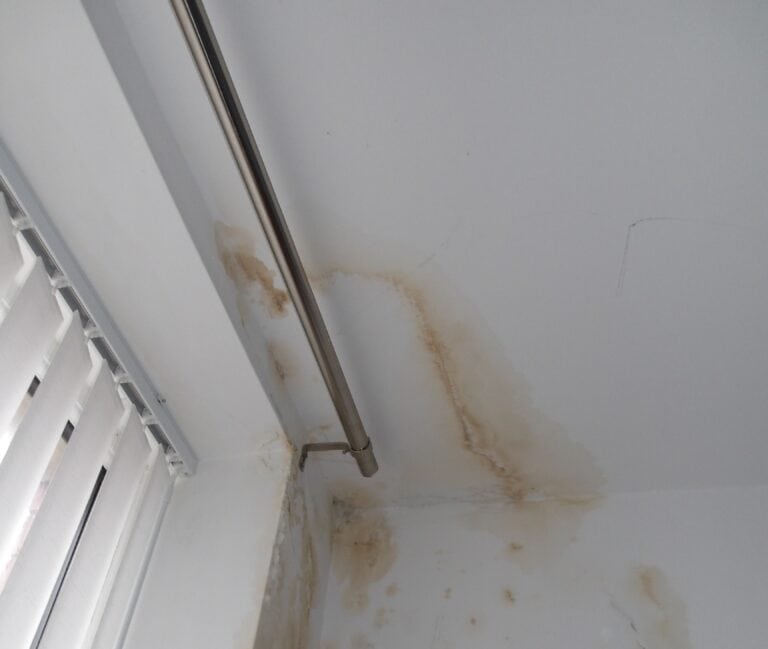
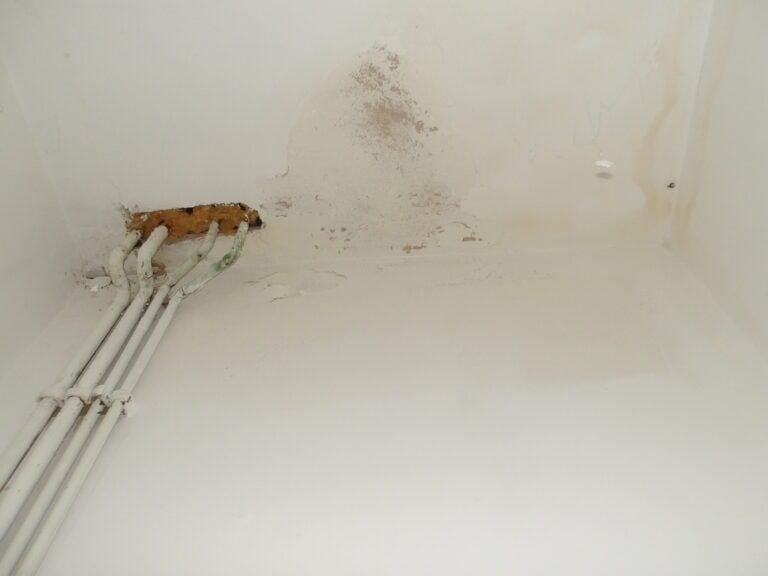
The first step in repairing damp patches on ceilings is to find the exact cause of the damp. There are a few basic checks homeowners can carry out to help narrow down the cause of a damp patch on the ceiling.
In many cases the cause isn’t immediately obvious, especially when moisture is travelling through different parts of the building structure.
This is where an independent damp survey becomes useful. A surveyor will assess the property in detail, check humidity levels, and trace the source of the moisture using specialist tools where required. A full report is then provided outlining the exact cause of the damp, along with a clear recommended repair strategy.
This gives homeowners a clear understanding of the issue before any work is carried out, helping to ensure the correct repairs are made the first time.
It can be. While some issues start small, damp can worsen over time and lead to mould growth, damaged plaster, and in some cases structural problems if the source is not addressed.
Not usually. Even if the visible mark appears to fade, the underlying cause often remains, meaning the damp is likely to return unless the source is properly identified and repaired.
If the cause is unclear, a damp survey is the most reliable way to identify the source of the problem. It provides a detailed assessment of moisture levels and a clear plan for the correct repairs.