
Poorly installed or incorrectly positioned decking can cause damp problems in your home. Common issues include blocked air bricks, penetrating damp, and rising damp caused by bridging the damp-proof course. Left unaddressed, this can lead to fungal decay, damp walls, and costly repairs.
In this article, we explain why this happens and how to prevent decking from causing damp problems.
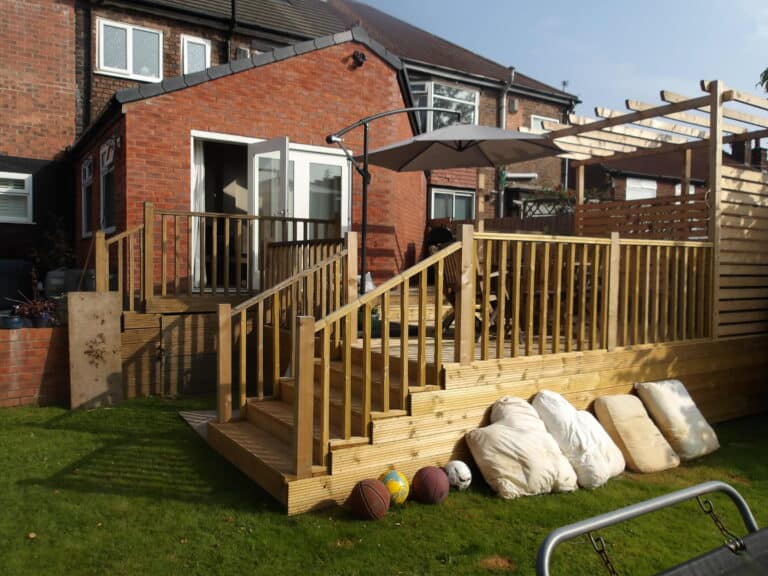
Installing decking effectively raises the ground level around your property. Positioning decking too close to the house increases the risk of damp by allowing moisture to build up against external walls and restricting airflow. However, installing decking at the correct height prevents this. This way it doesn’t bridge the damp-proof course. Keeping an adequate distance from the property, ensuring subfloor ventilation remains clear, and carrying out regular maintenance.
Decking contributes to damp issues in several ways, depending on its design and installation. Most problems relate to how it affects moisture levels around the property and whether it restricts natural airflow or interferes with key building features. Below, we look at the most common causes in more detail.
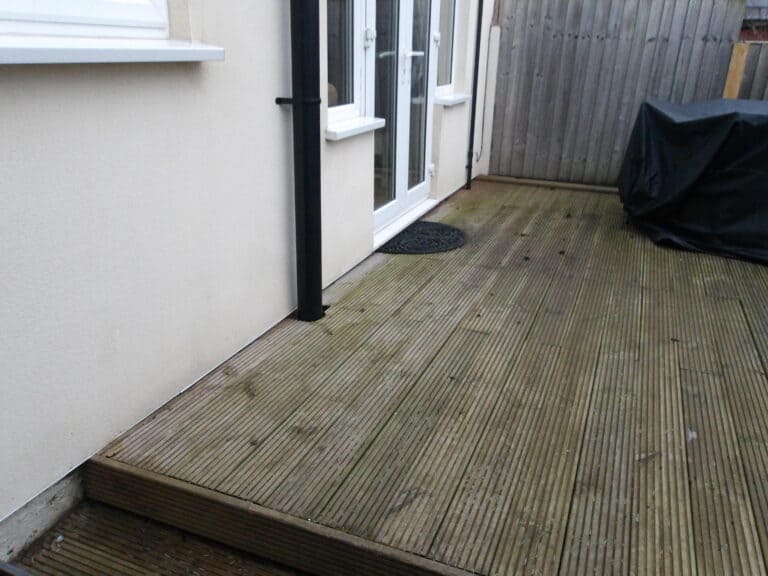
Here we can see a property we carried out an independent damp survey in Chester on that was suffering from damp internal walls as well as fungal decay to the subfloor timber joists. Incorrectly installed decking is the primary cause of this problem
The image shows the external render in direct contact with the decking, which effectively bridges the damp-proof course. Bridging a damp-proof course allows moisture to bypass the barrier and enter the property walls.
There was also a secondary issue with this installation. The decking was in direct contact with the external brickwork, which is a solid 9-inch wall construction. In this part of the country, where conditions are wet for much of the year, the decking does not have sufficient opportunity to dry out. Timber is hygroscopic, meaning it absorbs and retains moisture. When persistently wet timber is in contact with brickwork, it can encourage moisture transfer into the masonry. This becomes evident during rainfall, where moisture tracks back towards the property, contributing to internal damp issues.
The most serious issue associated with incorrectly installed or poorly maintained decking is the increased risk of timber decay within the subfloor of the property. Several factors cause this to develop.
Firstly, when decking is installed above subfloor ventilation, such as air bricks, it restricts airflow beneath the property. Reduced ventilation leads to a build-up of moisture within the subfloor void. As the timbers are hygroscopic, they readily absorb this excess moisture. Over time, this creates conditions where fungal decay can develop, and in more severe cases, dry rot may occur, particularly where warm conditions are present from heating systems and pipework.
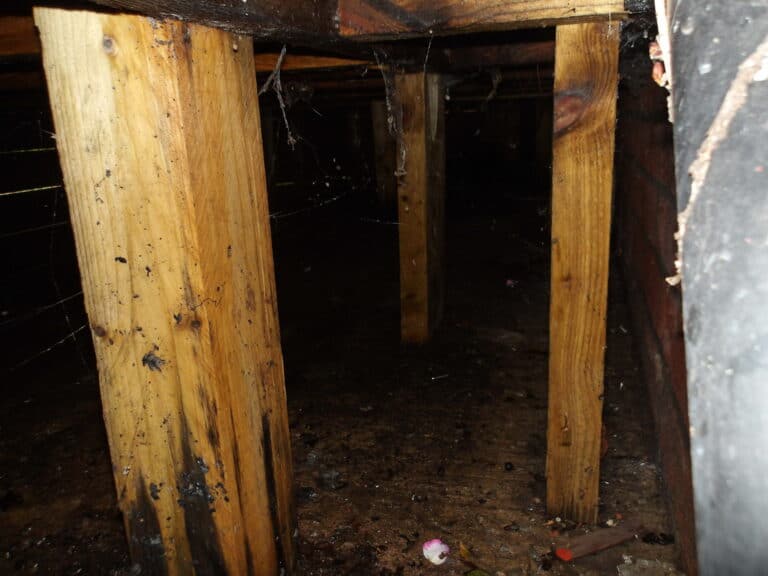
This lack of ventilation can be further exacerbated by the environment beneath the decking itself. Decking is exposed to external weather conditions year-round, remaining damp for much of the year and frequently being re-wetted through rainfall and cleaning. At the same time, moisture also rises from the ground below. This combination creates a consistently moisture-rich environment beneath the decking.
As a result, a significant volume of moisture-laden air can accumulate beneath the decking. This air will naturally seek equilibrium, and where higher moisture levels exist below the decking in comparison to the subfloor inside your home, moisture will be drawn through the airbricks. Over time, this can create ideal conditions for fungal decay within the subfloor structure.
Here is a photograph of below the decking on this property.
Correct installation and proper maintenance prevent decking from causing damp.
Install decking at least 150mm below the damp-proof course and maintain a clear gap between the decking and the property. If the property has a suspended timber floor, keep air bricks clear and maintain adequate subfloor ventilation. This prevents damp air from beneath the decking entering and circulating into the home.
Direct water away from the property using proper drainage so it does not collect against external walls. Where possible, design the installation with access for inspection and maintenance beneath the decking, allowing early identification and resolution of any issues.
If you are concerned that decking around your property may be contributing to damp or timber decay issues. It is important to have it properly assessed with a professional damp survey before further damage occurs. At Oakbridge Independent Damp and Timber Surveyors, we provide impartial inspections to identify the true cause of damp problems. We determine whether the issues stem from installation, ventilation, or underlying building defects. We produce clear, detailed reports that give you an accurate understanding of the problem so you can take the correct remedial action.
For more expert advice, practical guidance, and insights into damp, condensation, and timber issues, visit our Knowledge Hub. It’s a useful resource for homeowners, landlords, and property investors looking to protect and maintain their properties.